



 Select your Office

 +1(267) 606 1002
The art of precision dosing: optimising the incorporation of anti-caking agents into your food-grade powders!
In the food and drink industry, ensuring the consistency and free-flowing nature of powdered ingredients presents major challenges.
Ambient humidity, compression during storage or the hygroscopic nature of the products tend to cause unwanted clumping. This is where anti-caking agents come into play. They are mainly used in demanding applications such as:
- Grated cheese: to prevent strands of cheese from clumping together in the packet.
- Icing sugar: to preserve its volatile free-flowing properties.
- Spices and flavouring blends: to ensure even dispersion.
- Baking powders: to preserve the effectiveness of the reactive agents before baking.
Among the preferred solutions, natural starch (from maize, potatoes or tapioca) stands out as the benchmark. As well as offering a 100 per cent natural, clean-label alternative that is fully accepted by consumers, it forms an impermeable physical barrier around moist particles, thereby preventing any caking.
In practical terms, what does an anti-caking agent processing and dosing line look like in an industrial setting?
To ensure maximum effectiveness without altering the finished product, the incorporation of this natural additive requires powder handling equipment suited to each stage of the process.
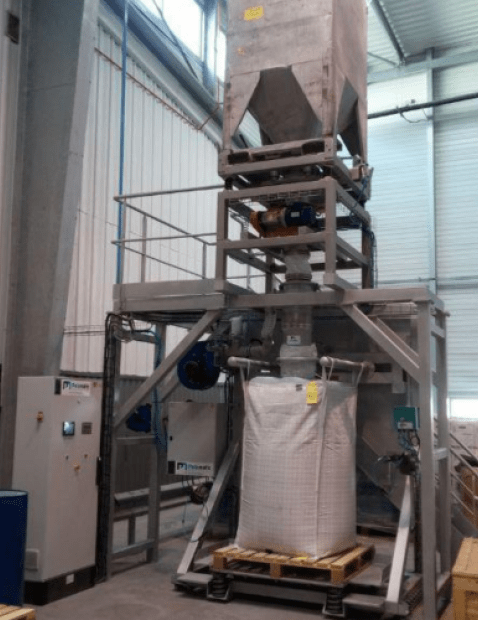
Unloading and cleaning: The screened bag-emptying station
It all begins at the raw materials unpacking stage. The anti-caking agent is usually delivered in bags.
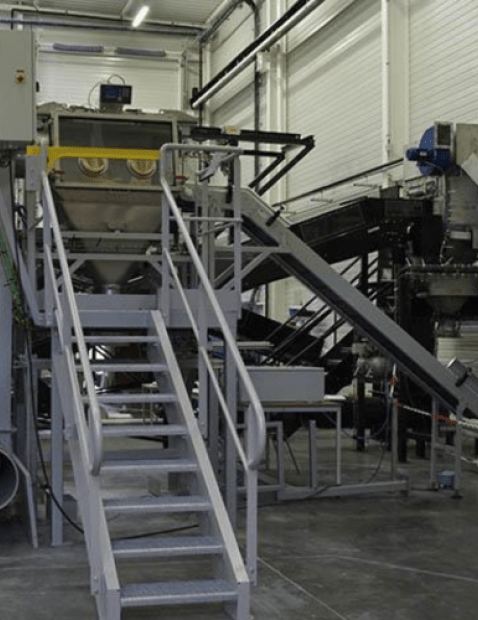
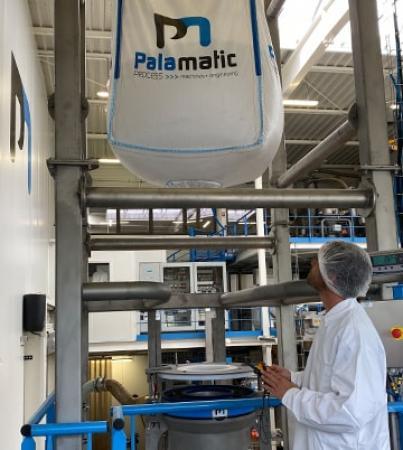
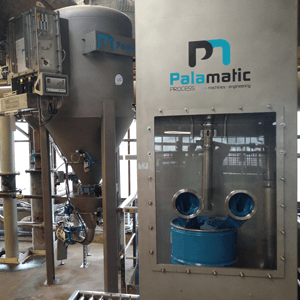
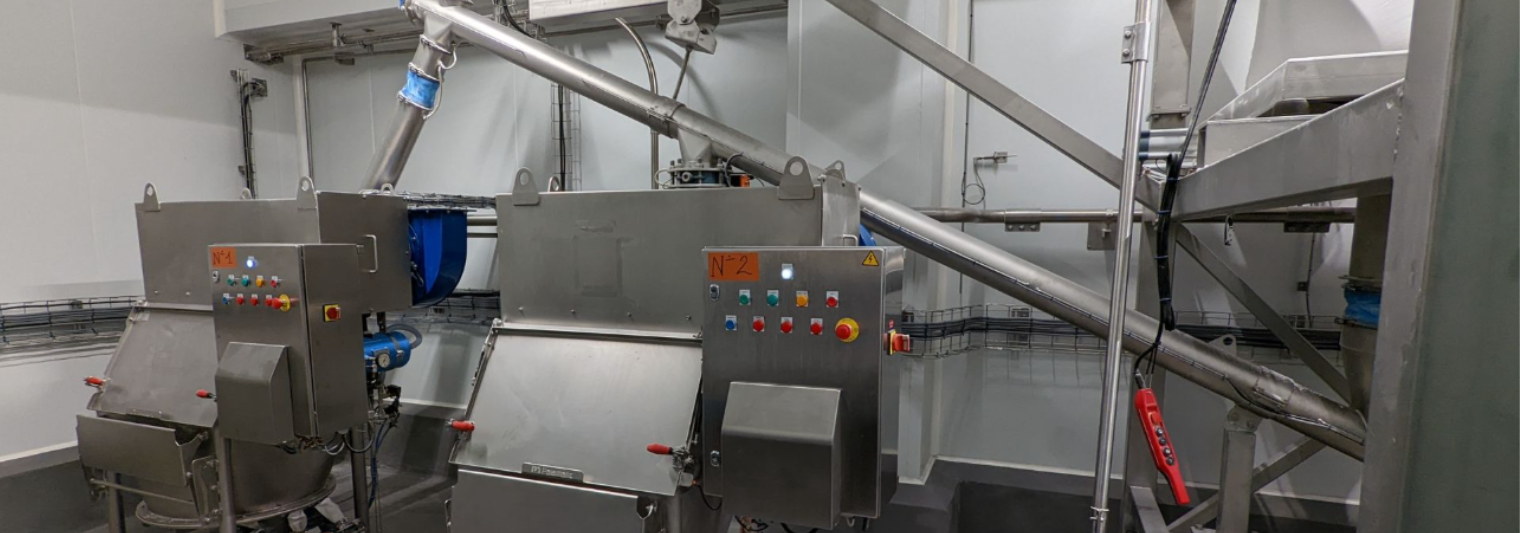
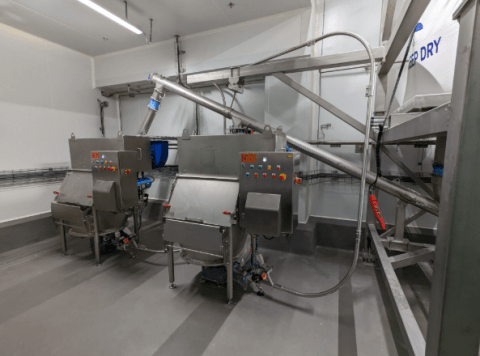
To introduce it into the process without posing a health risk or interrupting the flow, an ergonomic bag-emptying station fitted with an integrated screening system is used (such as the modular bag-emptying and screening station from Palamatic Process).
Why is this stage crucial? Health & Safety & Quality:
- Health & Safety & Quality: The integrated vibrating screen instantly removes any foreign matter (pieces of paper or plastic resulting from opening the bag, powder clumps) before the material is fed into the production line.
- Health and Safety at Work: Fitted with a dust extraction hood that captures powder emissions at source, the station prevents operators from inhaling dust and keeps the workshops clean.
Transport to the application point
Once the powder has been sieved, it must be transferred to the final dosing point. In food processing plants, this feed point (mixer hopper, grinder or conveyor belt) is often situated at a height of between 1.5 m and 2 m above the floor.
There are two main categories of technology used to convey the material:
- Pneumatic conveying (by suction or pressure): The material is transported through a network of pipes using a flow of air. Dense-phase pneumatic conveying technology is ideal for preserving the integrity of fragile products and ensuring total containment without dust emissions, even over long distances.
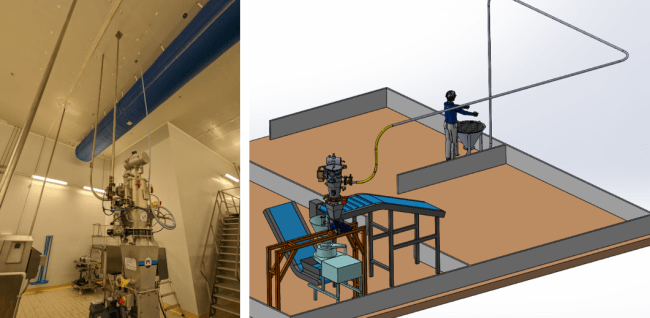
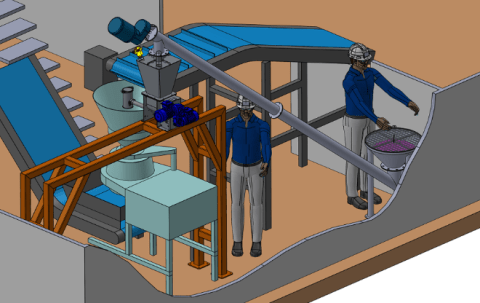
- Mechanical screw conveying: Whether using a tubular screw conveyor or a flexible screw (spiral), this mechanical system ensures the continuous lifting of the product over shorter, more direct routes whilst consuming little energy.
Precision dosing: Adjusting the ideal ratio
For an anti-caking agent such as starch to fulfil its role perfectly without affecting the taste or texture of the final product, the dosage must be extremely precise: it generally accounts for 2 per cent to 3 per cent of the product’s total mass.
The choice of equipment depends directly on the flow behaviour of the powder:
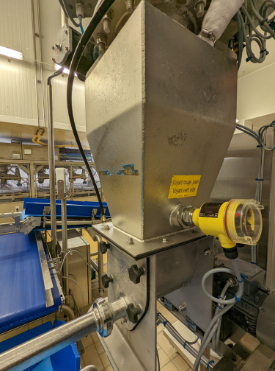
- The screw feeder (single-screw or twin-screw): This is the preferred choice for powders ranging from free-flowing to very difficult to handle. Thanks to an extraction and metering screw, the flow rate is controlled with high volumetric or gravimetric precision.
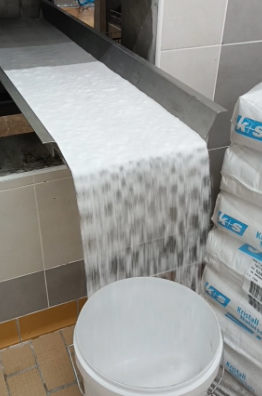
- The vibrating feeder: Ideal for friable or abrasive products, or those requiring extremely easy cleaning. The vibrating chute preserves the particle size distribution of the materials without mechanical friction or shearing.
Distribution and sprinkling: Spread the mixture evenly
Ultra-precise dosing is essential, but the powder must also be spread perfectly evenly over the product being processed! Whether it’s applying starch to cheese, or flour or spices on a bakery production line, the product often moves along a wide conveyor belt (which can be up to 1 metre wide). Applying the powder at a single point would result in some areas being over-coated and others left untreated.
Several industrial strategies are used to spread the material evenly:
- The absence of a dedicated dusting system (direct drop): This option is only feasible when the process includes a downstream mechanical mixing stage (such as a coating drum, a mixer or a grinder). The powder is deposited at specific points and then naturally mixed with the main product.
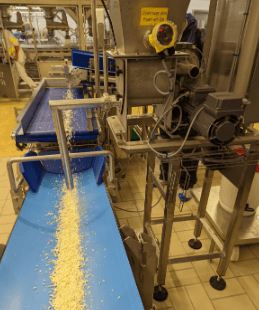
- The wide vibrating chute spreader: The powder from the dosing unit falls onto a flared or perforated vibrating tray. The micro-vibrations allow the powder to spread evenly in a uniform curtain across the entire width of the conveyor belt.
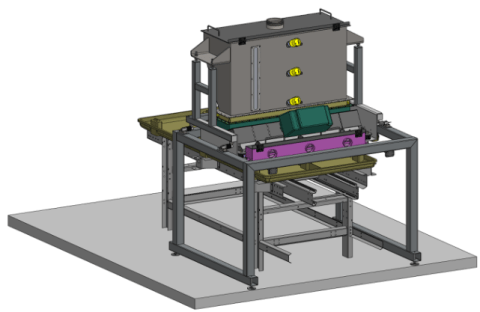
- The scraper-wheel (or honeycomb roller) duster: A rotating roller fitted with blades or cavities ‘scrapes’ the powder dispensed at the top of a slot to distribute it continuously and in a controlled manner as a fine spray, ensuring a precise coating.
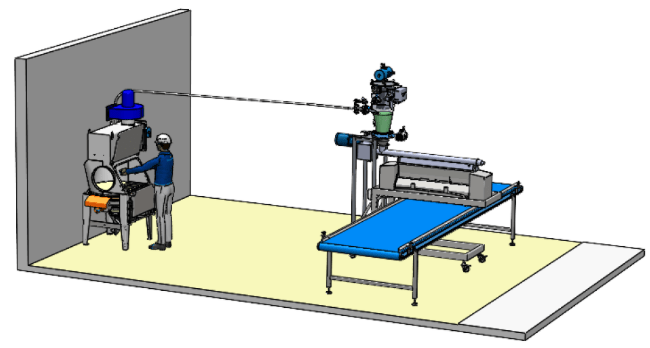
The use of natural anti-caking agents such as starch is a powerful way to improve the user experience of everyday food products. However, its success depends on complete control of the industrial process: pre-treating the powder, transferring it cleanly, and dosing it at the right point (as here, directly above the grinder).
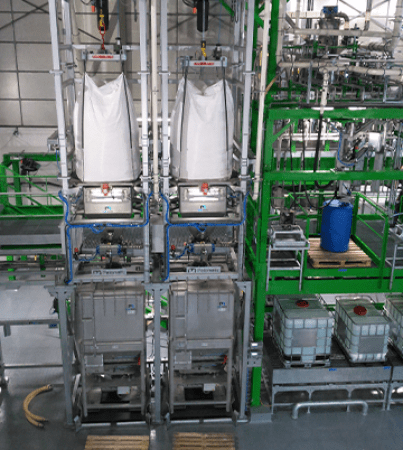
Choosing the right equipment (bag-emptying station, sealed transfer system, dedicated dosing unit) enables a balance to be struck between industrial performance, food safety and consumer satisfaction.

Do you need any further information?
I can help you and support you with your research.
Julien, powder expert
 +33 (0)2 99 86 06 22
 Contact me