


 Select your Office

 +1(267) 606 1002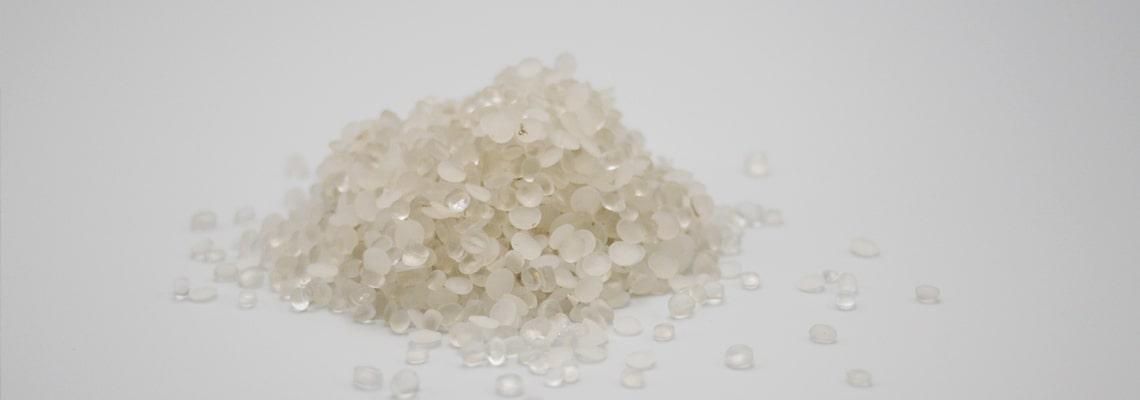
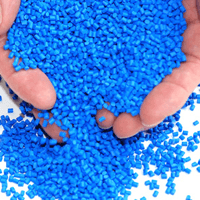
Material processed: polypropylene pellets
Compounding line
Company operating in the petrochemical sector.
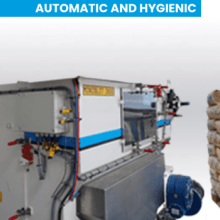
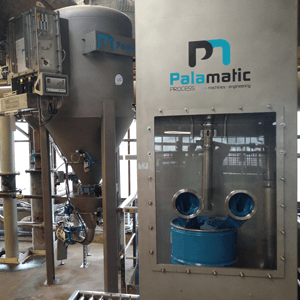
Installation of a Minislit® automatic bag-emptying system for polypropylene pellets with a throughput of 100 bags per hour. The bags in question are plastic bags weighing between 20 and 25 kg.
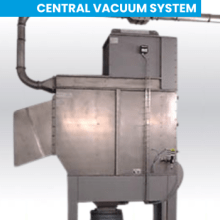
The Minislit® automatic bag emptying system features a specially profiled ribbon-cutting system that opens the bags on three sides without shredding them. The principle of turning the bags over and emptying them ensures a maximum emptying rate. The contents of the bags are thus channelled into a static chute to be fed by gravity into the downstream process. The automatic bag-opening machine is made from 304 stainless steel. A dust filter is integrated into the system to ensure a clean and healthy working environment.
All drive components – shafts, pulleys, bearings and drive chain – are located outside the machine.
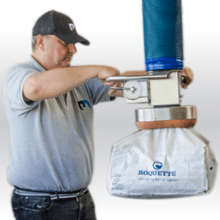
The bags are delivered on pallets. The operator uses a bag handler to lift them and place them one by one onto a belt conveyor, which carries the bag to the entrance of the machine enclosure. A belt conveyor then transfers the bag from the machine inlet to the cutting system. The cutting unit consists of a band saw mounted on two pulleys. The cutting system is actuated by a pneumatic cylinder mounted on the outside of the machine. The bag is thus cut along three sides (patented principle): the front and the sides of the bag. The rear side is not cut to allow the bag to be opened and discharged in a single piece.
This inversion system allows the bags to be turned inside out and discharged to the bag compactor. It is supplemented by a pneumatically operated mechanism that turns the bag inside out (patented principle). The compactor consists of an Archimedes screw, mounted in a screened trough.
The empty bag compactor conveys the empty bags into a polyethylene sleeve fitted to the pipe on the outside of the frame. Two elastic rings then hold this sleeve in place so as to compact the empty bags. The bag compaction rate allows 60 to 80 bags to be recovered per metre of sleeve.