

 Select your Office


 +1(267) 606 1002
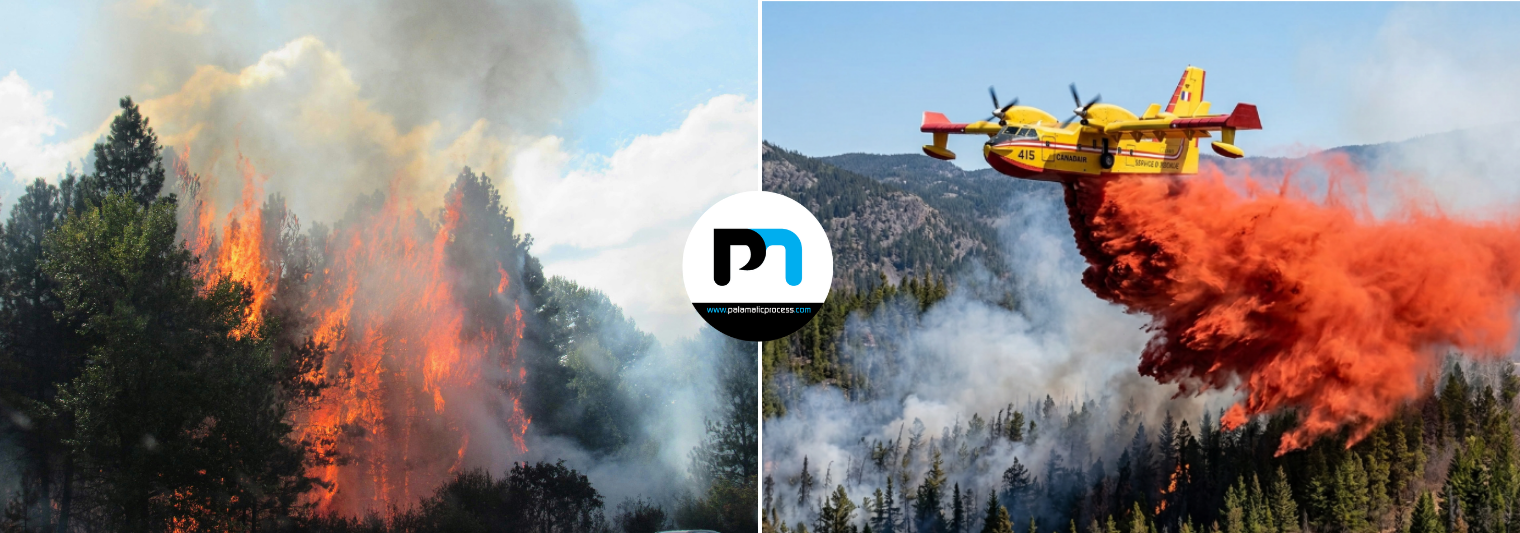
Megafires represent a major environmental and safety challenge. To support the action of water bombers (Canadair, Dash), large-scale production of fire retardants requires absolute industrial precision.
What is the difference between fire extinguisher powder and forest fire retardant? Above all, how do you design a robust, safe, and high-performance powder processing line to manufacture these retardants?
Here is an inside look at a complex engineering process mastered by the experts at Palamatic Process.
1. Forest Fire Retardant vs Extinguishing Powder: What is the Difference?
Although they share a similar chemical base, these two products, which often differ in color (red for retardants, blue for extinguishers), do not have the same purpose:
- Extinguishing powder (ABC or BC): sprayed dry, its purpose is immediate extinction through direct chemical smothering of the flame.
- Forest fire retardant (e.g., Phos-Chek): mixed with water at air bases, it is dropped ahead of the fire with no environmental impact when applied at correct rates. Its role is to slow propagation. Under heat, the fire-retardant salts are forced to decompose, converting vegetation into non-flammable char. Combustion temperatures are thus increased from 300 to 700 or even 800 degrees, according to the magazine Natura Sciences.
What is Powder Retardant Composed Of?
To achieve optimal efficiency once rehydrated (80% water / 20% dry product), dry retardant must combine several ingredients with vastly different particle sizes and densities:
- Fire-retardant salts (~80-90% dry weight): ammonium polyphosphate or diammonium phosphate (active agents).
- Thickeners (1 to 2%): guar gum or clays, allowing the liquid to adhere to foliage.
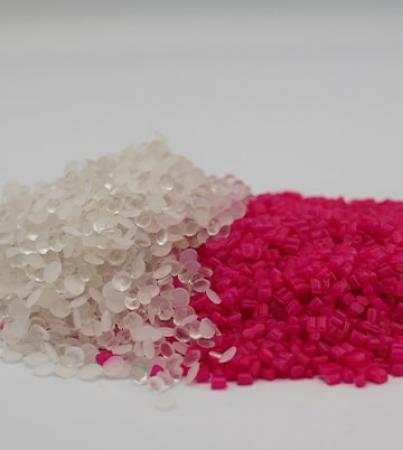
- Pigments (1%): iron oxide (red/pink color) to provide optimal visibility for pilots from the air and allow ground firefighters to identify treated areas.
- Corrosion inhibitors: to protect aluminum aircraft tanks.

Are you planning a powder processing line?
I'm available to assist you with your project.
Guillaume DE CLERCQ, expert in powder processing lines
 +33 (0)2 99 86 06 22
 Contact our expert
2. Key Steps in a Powder-Based Flame Retardant Production Line
Key Steps in a Powder Processing Line for Retardants Industrial manufacturing of retardant in powder form relies on Bulk Solids Handling. The main challenge consists of introducing very low proportions of additives (pigments, gum) into a massive salt matrix without forming lumps.
1. Storage and arch-breaking of raw materials
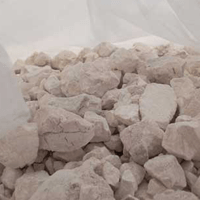
Because ammonium salts are extremely hygroscopic (absorbing moisture from the air), they tend to agglomerate.
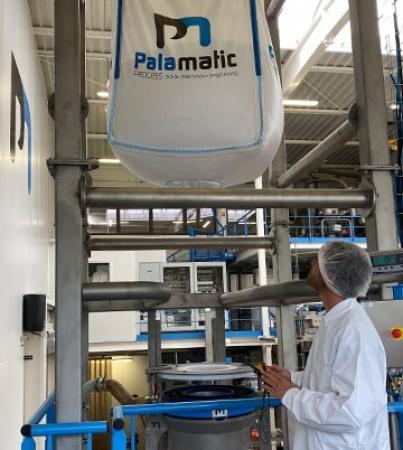
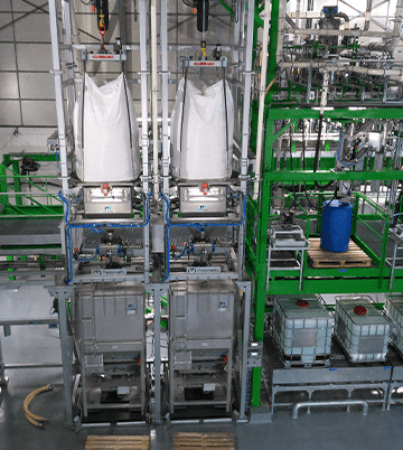
- Silos and Big Bag discharge stations: equipped with discharge aids to ensure smooth flow.
- Industrial lump breaker: positioned at the head of the line to break up blocks prior to any handling.
2. Ultra-precise additive dosing
For a retardant line to be effective, the dispersion of pigment and guar gum must be perfect.
- Loss-in-weight feeders or high-precision dosing screws integrate micro-ingredients into the main flow.
3. Safety screening
A rotary or vibrating sieve eliminates foreign bodies and guarantees uniform particle size distribution. This step is critical: improperly calibrated powder risks clogging the spray nozzles of water bomber aircraft.
4. Mixing and spraying (The core of the process)
The choice of industrial mixer is decisive for ensuring a homogeneous pink color and rapid dissolution in water.
- Ploughshare or ribbon mixer: provides rapid, gentle particle blending.
- Liquid injection: if anti-caking agents (silicones) or liquid anti-corrosives are required, they are injected via pressurized atomizing nozzles / dispersion nozzles directly into the powder vortex.
5. Airtight packaging
The finished product is directed toward Big Bag filling or bagging lines. Packaging is lined with hermetic polyethylene films to protect the retardant from ambient moisture until field use.
3. The 3 technical constraints to be incorporated into the line's design
Designing a retardant powder formulation plant requires advanced expertise in process engineering:
1. ATEX risk management (Dust explosion)
Handling very fine organic compounds such as guar gum generates explosive dusts. The line must integrate industrial dust collectors, explosion vents, and ATEX-certified equipment.
2. Protection against corrosion and abrasion
Ammonium salts and mineral pigments are aggressive to machinery. The use of stainless steel (304L / 316L Stainless Steel) on all product-contact areas is essential to ensure equipment longevity.
3. Transfer air management
If the powder is conveyed pneumatically, the air used must be dried / dehumidified (low dew point) to prevent pipe clogging.
Palamatic Process Support for Complex Powder Lines
At Palamatic Process, we design custom powder engineering lines adapted to the requirements of chemical and flame-retardant formulations:
- Testing at test station: testing your powders on full-scale mixers and dosing systems.
- Integrated design: from raw material reception to final bagging.
- Regulatory compliance: strict adherence to ATEX directives and operator safety.
Do you have a project for handling, dosing, or mixing flame-retardant or chemical powders?
Contact our sales engineers to analyze your technical specifications.