

 Select your Office

 +1(267) 606 1002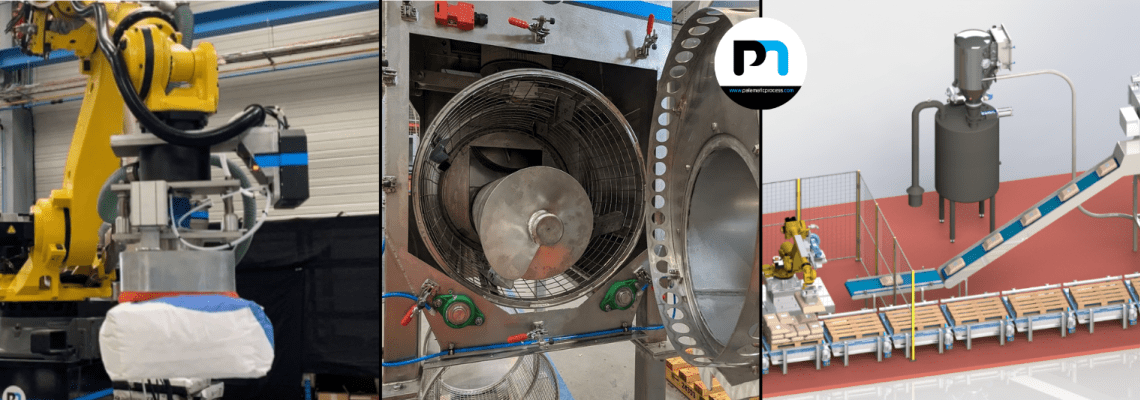
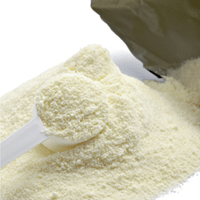
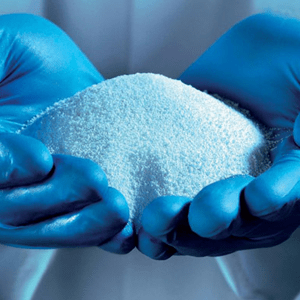
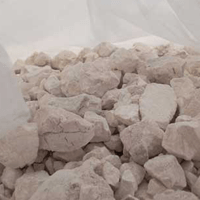
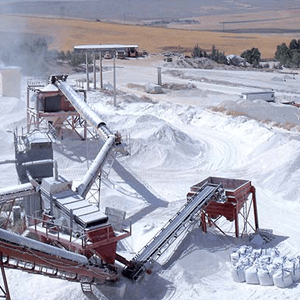
Processed powders: Calcium carbonate, Sodium carbonate, Sodium sulphite
Automated de-bagging line for raw materials packed in kraft bags
Background and Issues
As part of its efforts to optimise its washing process, this industrial site specialising in the production of technical papers wished to automate the unpacking of raw materials packed in kraft bags weighing 15 to 25 kg. These powders – notably calcium carbonate (CaCO₃), sodium carbonate (Na₂CO₃) and sodium sulphite (Na₂SO₃) – are used in the preparation of solutions in tanks to feed the digesters.
The main objective was twofold:
- To achieve a high and stable throughput to enable the preparation of 8 batches per 8-hour shift, representing a maximum consumption of 6,000 litres per hour;
- To eliminate manual operations involving the cutting open and emptying of bags, in the interests of safety, consistency and improved working conditions.
The client also expressed a need for a system capable of handling bags of various sizes and weights, whilst ensuring continuous operation with minimal human intervention, including for the management of empty pallets.
Solution implemented
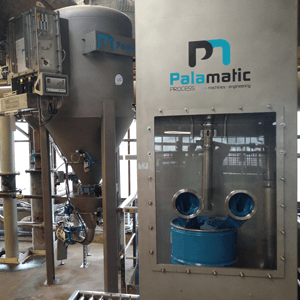
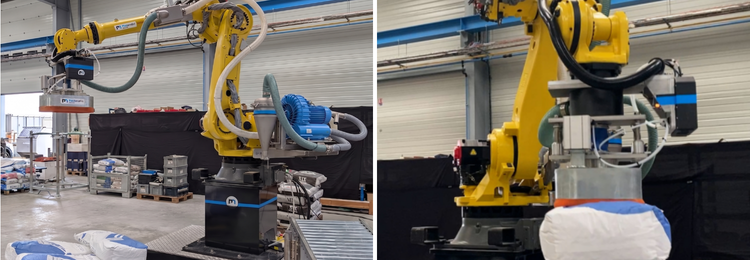
To meet requirements for throughput, flexibility and automation, Palamatic Process has designed a complete automatic bag-emptying line incorporating a Sacktip® Sackbot 200 R36 depalletising robot and a Rotaslit® bag-emptying system.
Operational process
Upstream storage:
- Pallets containing the sacks are conveyed and stored on motorised roller conveyors with accumulation. The storage capacity allows for 8 to 10 pallets to be positioned upstream of the line.
Automated depalletising:
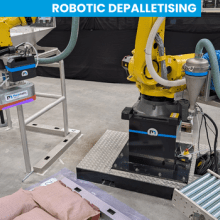
- The Sackbot 200 R36 robot, equipped with an intelligent 3D vision system, detects the exact position of each bag, regardless of its size or orientation, without the need for prior manual programming. This ensures reliable and rapid gripping, with a high recognition rate even on mixed-load pallets.
Feeding the bag-opening machine:
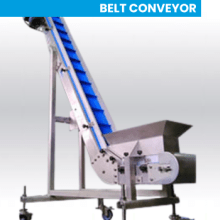
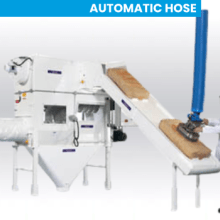
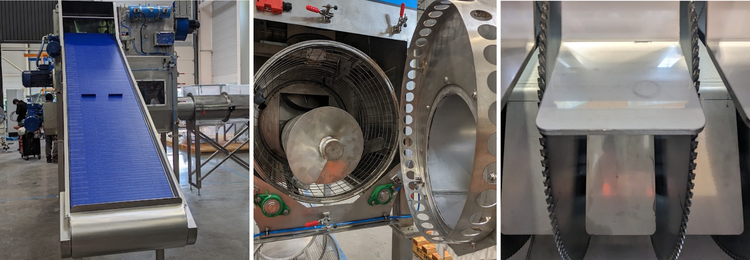
- The bags are automatically placed on the feed conveyor of the Rotaslit® bag-opening machine. This is fitted with industrial cutting blades that allow the bags to be opened lengthways without damaging the product.
Product/waste separation:
- Once opened, the contents are released by gravity into a hopper fitted with a dynamic de-agglomeration system (squirrel cage) ensuring a smooth flow of the powder. The empty bags are collected in a dedicated compactor.
Pneumatic product transfer:
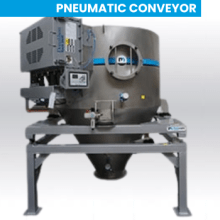
- The powder is then conveyed by dilute-phase pneumatic conveying to the suspension tanks, before being transferred to a buffer storage tank. This technology ensures optimal throughput without generating dust.
Empty pallet handling:
Once unloaded, the pallets are automatically directed to a pallet stacker located at the end of the line.
Benefits of automated installation
- Bag-removal rate: 6 bags/minute
- Accepted bag sizes: 15 kg, 20 kg, 25 kg
- Target overall throughput: 6,000 L/h (across 8 production batches per shift)
- Compliance: Machinery Directive 2006/42/EC
This solution offers full automation of the entire bag-emptying process, whilst taking into account safety, flexibility and energy efficiency requirements.
Conclusion
The installation was designed around a set of Palamatic Process systems, enabling the complete automation of the bag handling process, from loading to the transfer of the powder to the preparation tanks.